

To pay for your reading on your telephone bill, simply call
Instantly message our featured psychics online via psychic messenger.
Click to start
Register now to start your reading online. PSYCHIC MESSENGER- Cheapest psychic service in the UK
- Our readers are available 24/7
- 100% confidential service
- In-depth, concise, personal readings
- Thousands of 5* reviews
Published 08/10/2026 • Updated 09/10/2026 by Joanne Jones
Tarot Card Meanings: Complete Guide to All 78 Cards Explained
By Joanne Jones, Founder of Trusted Psychics | Psychic, Tarot Reader & Author | 30+ Years' Experience
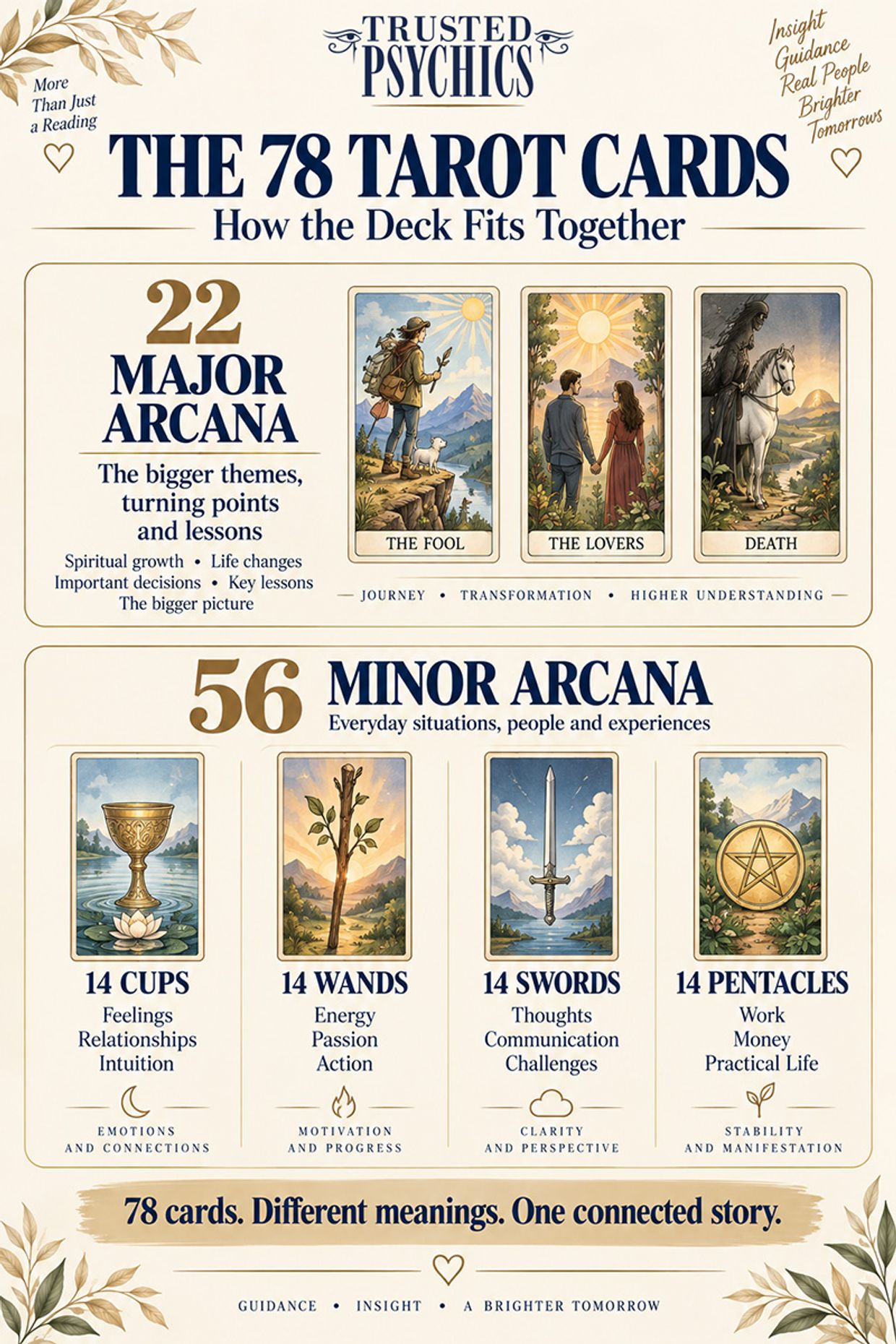
A traditional Tarot deck contains 78 cards: 22 Major Arcana and 56 Minor Arcana, divided between Wands, Cups, Swords, and Pentacles. But learning Tarot isn't simply about memorising 78 definitions.
I've studied Tarot and spent more than three decades doing psychic and tarot readings, and one of the most important things I've learned is that knowing a card's traditional meaning and knowing how to interpret it in a reading are not quite the same.
My approach is to consider five things:
Card Family → Suit → Number or Court Role → Imagery → Reading Context
Traditional meanings give you a starting point. The question, spread position, imagery and surrounding cards help explain why that meaning matters in a particular reading.
I don't approach the deck as 78 separate definitions to memorise. I look at the structure of the card first, then at what is happening around it.
I'll use that approach throughout this guide. The Star may traditionally represent hope.
But hope about what?
A relationship recovering?
Confidence returning after disappointment?
Someone becoming optimistic again even though nothing around them has actually changed.
Death can represent an ending. But is the whole situation ending, or is one part of it changing? The Hermit can represent solitude.
But is that space helping somebody understand themselves, or have they become isolated? Those distinctions are where Tarot becomes more interesting, and they are what this guide is designed to teach.
After many years of giving and working with readings, I've learned not to force a dramatic interpretation simply because a dramatic-looking card has appeared. I want to understand why the card is there, what the person asked and what the rest of the spread is telling me.
Trusted Psychics has connected customers with psychic and Tarot readers since 1992, and today customers can choose from 400 experienced readers with different tools, styles, and specialisms.
— Joanne Jones, Founder of Trusted Psychics
What Are the 78 Tarot Cards?
The 78 cards in a traditional Tarot deck are divided into two main groups:
22 Major Arcana cards — from The Fool through to The World.
56 Minor Arcana cards — divided into Wands, Cups, Swords, and Pentacles.
Each Minor Arcana suit contains 14 tarot cards:
Ace through Ten, followed by Page, Knight, Queen, and King.
That structure is one of the first things I recommend learning before you start your tarot card readings. Knowing what position in the deck a card falls under will give you some insight into what the card may mean.
Major Arcana cards can suggest important transitions or stages of personal growth.
Minor Arcana can represent what you're dealing with in your day-to-day life, whether it's relationships, careers, money, communication, family, choices, or emotions.
Neither group should be interpreted as good or bad.
The question is:
What does this card mean in this spread?
What is this particular card contributing to this particular reading?
How I Read Tarot: The Trusted Psychics Five-Layer Method
Over more than 30 years of psychic and Tarot readings, I've found that individual card meanings become much easier to understand when you stop treating them as isolated definitions.
The method I use is to look at five layers:
Card Family → Suit → Number or Court Role → Imagery → Reading Context
Each layer narrows the interpretation. By the time you reach the customer's question and the surrounding cards, you have much more to work with than a memorised keyword.
1. Card Family
Is the card Major or Minor Arcana?
Major Arcana cards often bring a broader theme into focus.
Minor Arcana cards tend to show how those themes appear in everyday experience.
2. Suit
For Minor Arcana cards, the suit gives us the territory.
Wands commonly relate to action, motivation, creativity, and ambition.
Cups concern emotion, relationships, connection, and intuition.
Swords frequently relate to thought, communication, truth, and conflict.
Pentacles tend towards work, money, resources, stability, and practical life.
3. Number or Court Role
An Ace doesn't function like a Ten.
A Five tends to behave differently from a Nine.
A Page expresses a suit differently from a King.
Those patterns make learning the deck considerably easier.
4. Imagery
What is actually happening in the card?
Where are the people looking?
What are they holding?
What is happening in the background?
Sometimes one small visual detail gives you the most useful interpretation.
5. Reading Context
Why did this card appear here?
What was the question?
Where did it land in the spread?
What came before and after it?
That last layer is often what turns a definition into an interpretation.
Tarot Card Meanings at a Glance
Before looking at every card individually, it helps to understand the basic structure.
| Tarot Group | Cards | Common Themes |
|---|---|---|
| Major Arcana | 22 | Larger themes, development, choices, transitions. |
| Wands | 14 | Action, motivation, ambition, creativity. |
| Cups | 14 | Emotions, relationships, connection, intuition. |
| Swords | 14 | Thoughts, communication, decisions, truth, conflict. |
| Pentacles | 14 | Work, money, resources, security, practical life. |
A Cup may appear in a career reading.
A Pentacle can make a difference in a relationship reading.
Not all Swords are automatically negative.
And a Major Arcana tarot card is not always predicting a major event.
“The structure tells me where to start looking, not where I have to finish.”
Major Arcana: The Journey Through 22 Cards
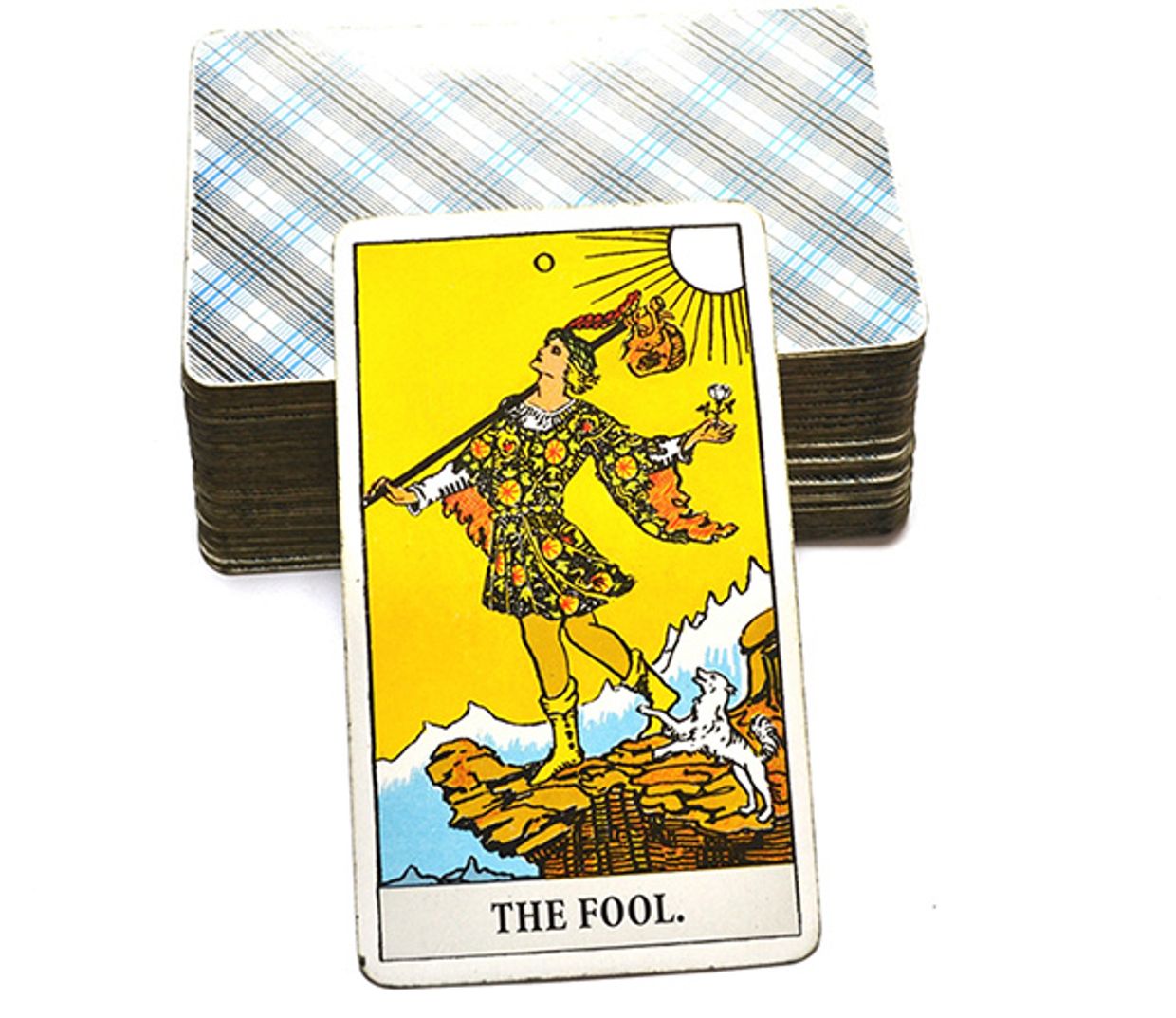
The Major Arcana begins with The Fool at 0 and finishes with The World at XXI.
The cards are often described through the idea of the Fool's Journey: a symbolic progression through beginnings, choices, challenges, reflection, change, and eventual completion.
Rather than treating each Major Arcana card as a fixed prediction, I begin by asking what larger theme the card is bringing into the reading, and how that theme relates to the situation being explored.
0 — The Fool
Traditional theme: New beginnings, openness, possibility and taking a chance.
What I look for: Is this genuine openness to something new, or are important practical details being ignored?
Reversed: Hesitation can be as important as recklessness. Sometimes somebody wants to begin but is frightened of not knowing where the path leads.
Joanne's question:
“What would you try if you didn't need to know exactly how it would turn out?”
I — The Magician
Traditional theme: Ability, initiative, resources and turning an idea into action.
What I look for: Does the person already have more available to them than they realise?
The Magician interests me because all the tools are already on the table.
The question is often not whether you have resources, but whether you are using them.
Reversed: Ability may be underused, poorly directed, or used manipulatively.
Joanne's question:
“What do you already have that you're waiting for somebody else to give you?”
II — The High Priestess
Traditional theme: Intuition, observation, inner knowledge and what isn't immediately visible.
What I look for: Is there genuinely something beneath the surface, or is uncertainty encouraging somebody to fill gaps with assumptions?
Reversed: Intuition can become difficult to hear when fear, wishful thinking or outside opinions get louder.
Joanne's question:
“What do you sense, and what do you actually know?”
III — The Empress
Traditional theme: Nurturing, creativity, growth, abundance, and care.
What I look for: What is being given the conditions to grow?
This might concern a relationship, creative project, family situation, or the person's relationship with themselves.
Reversed: Care can become overgiving. Nurturing everybody else while neglecting yourself is still an imbalance.
Joanne's question:
“What are you nurturing, and is anything nurturing you?”
IV — The Emperor
Traditional theme: Structure, authority, boundaries, and stability.
What I look for: Where does structure help, and where has it become control?
Reversed: Boundaries may be too rigid, absent altogether or being used to dominate rather than protect.
Joanne's question:
“What needs firmer structure — and what needs more flexibility?”
V — The Hierophant
Traditional theme: Tradition, established systems, shared beliefs and learning.
What I look for: Is the person choosing a conventional path because it genuinely fits them, or because it is what they believe they are supposed to do?
Reversed: Challenging convention can be healthy, but rejecting every established idea simply because it is traditional can become another kind of rigidity.
Joanne's question:
“Do you believe this because it feels right, or because you've never questioned it?”
VI — The Lovers
Traditional theme: Connection, relationships, alignment, and meaningful choices.
What I look for: The Lovers is not automatically a promise of romance.
Very often, the deeper issue is whether somebody's choices match their values.
Reversed: Disharmony may involve two people, but it can also involve conflict within yourself.
Joanne's question:
“Are you choosing what you genuinely want, or what you think you're supposed to want?”
Read our latest guide on The Lovers card which explores more about relationships, breakups, soulmates, and new love.
VII — The Chariot
Traditional theme: Direction, determination, and focused movement.
What I look for: Movement is only useful when opposing forces are being directed towards the same destination.
Reversed: Effort may be high while direction is poor.
Joanne's question:
“Are you moving forward, or simply moving fast?”
VIII — Strength
Traditional theme: Courage, patience, resilience, and compassion.
What I look for: Strength is not always force.
Sometimes the stronger response is patience, restraint or refusing to react immediately.
Reversed: Confidence may be depleted, or somebody may be trying to appear stronger than they actually feel.
Joanne's question:
“What would strength look like here if it didn't mean pushing harder?”
IX — The Hermit
Traditional theme: Reflection, solitude, and inner guidance.
What I look for: Is the distance creating understanding, or has useful solitude become isolation?
Reversed: Sometimes the person needs less withdrawal. Sometimes they have never allowed themselves enough quiet in the first place.
Joanne's question:
“What might become clearer if you stopped looking outside yourself for the answer?”
X — Wheel of Fortune
Traditional theme: Cycles, changing circumstances, timing, and turning points.
What I look for: What changed outside your control, what keeps repeating, and what can you respond to differently?
Reversed: Difficult timing and repeated patterns aren't necessarily the same thing.
Joanne's question:
“What has changed, and what part of your response is still yours to choose?”
If you'd like to explore its symbolism, relationships and surrounding-card interpretations in more detail, read my complete guide on the Wheel of Fortune.
XI — Justice
Traditional theme: Fairness, truth, responsibility, and consequences.
What I look for: What are the facts, and what responsibility genuinely belongs to you?
Justice is useful because it discourages both avoiding responsibility and accepting blame for things you didn't control.
Reversed: There may be unfairness, imbalance, or reluctance to acknowledge consequences.
Joanne's question:
“What would this situation look like if you separated facts from what you wish were true?”
XII — The Hanged Man
Traditional theme: Pause, surrender and seeing something differently.
What I look for: Is the pause creating perspective, or has waiting become a way of postponing a decision?
Reversed: A temporary pause can turn into indefinite stalling.
Joanne's question:
“What changes if you stop trying to solve this from the same angle?”
XIII — Death
Traditional theme: Ending, transformation, transition, and release.
What I look for: Has the whole situation ended, has it changed form, or has the ending already happened while the person is still holding onto what it used to be?
Reversed: Resistance can occur after change as well as before it.
Joanne's question:
“What has already changed that you're still trying to keep the same?”
If you'd like to explore its symbolism, relationships and surrounding-card interpretations in more detail, read my complete Death Tarot card meaning guide.
XIV — Temperance
Traditional theme: Balance, integration, moderation, and adjustment.
What I look for: What two things are trying to coexist?
Temperance often becomes interesting when neither extreme provides the answer.
Reversed: Imbalance may come from excess, impatience, or competing priorities.
Joanne's question:
“What needs combining rather than choosing between?”
XV — The Devil
Traditional theme: Attachment, temptation, restriction, and unhealthy patterns.
What I look for: What keeps somebody attached even though another part of them recognises the cost?
The chains in the card matter because attachment may feel stronger than it actually is.
Reversed: Recognition can be the beginning of release.
Joanne's question:
“What are you holding onto even though part of you knows it isn't helping you?”
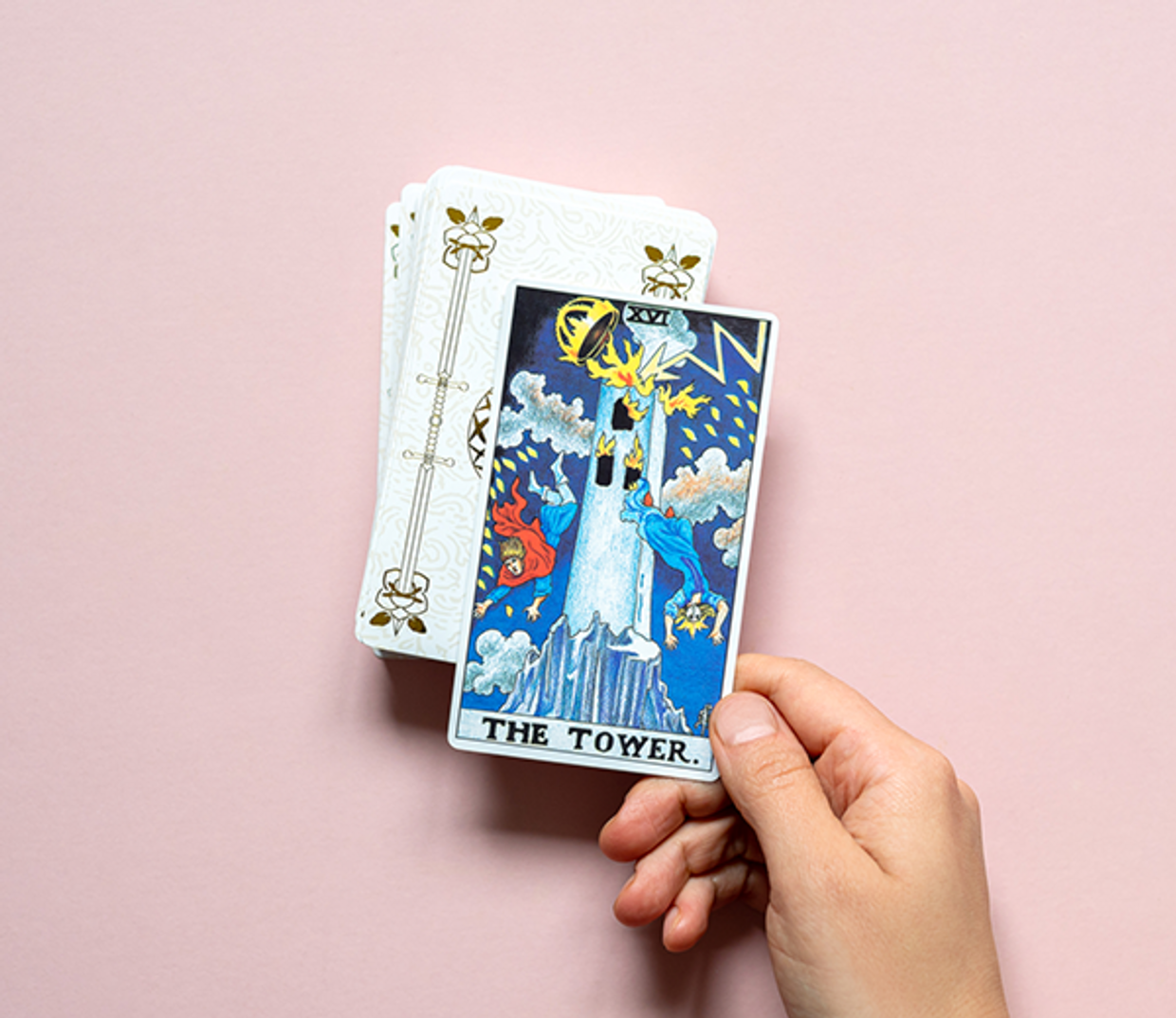
XVI — The Tower
Traditional theme: Disruption, revelation and unstable foundations being exposed.
What I look for: What has become impossible to ignore?
The Tower is dramatic, but the important part isn't always the disruption itself.
Sometimes it is the information the disruption reveals.
Reversed: A person may resist change or try to delay something already becoming apparent.
Joanne's question:
“What can you no longer pretend you haven't seen?”
XVII — The Star
Traditional theme: Hope, renewal, and inspiration.
What I look for: Has something happened that made this person stop believing circumstances could improve?
In love: Hope may be returning, but hope is not evidence that a relationship will work.
Reversed: Sometimes the person's ability to recognise hope is blocked rather than every possibility disappearing.
Card to compare: The Tower. The Star's position immediately after disruption changes how I understand its optimism.
Joanne's question:
“What are you beginning to believe might be possible again?”
If you'd like to explore its symbolism, relationships and surrounding-card interpretations in more detail, read my complete guide on the Star Card.
XVIII — The Moon
Traditional theme: Uncertainty, intuition, subconscious influence, and incomplete information.
What I look for: What is genuinely known, and what is being inferred because there isn't enough information yet?
Reversed: Confusion can begin lifting, but emerging information can also expose a previous misunderstanding.
Joanne's question:
“What do you actually know, and what are you filling in because you don't yet have the answer?”
XIX — The Sun
Traditional theme: Joy, vitality, confidence, and clarity.
What I look for: What becomes simpler once something is brought into the open?
Reversed: Positivity doesn't necessarily disappear. Sometimes expectations are too high, or enjoyment is being delayed.
Joanne's question:
“What becomes easier when you stop making this more complicated than it needs to be?”
XX — Judgement
Traditional theme: Recognition, reassessment, awakening, and informed response.
What I look for: What does somebody understand now that they couldn't see before?
Judgement is not necessarily about being judged by somebody else.
Reversed: Recognition may be resisted because accepting it would require a different response.
Joanne's question:
“Now that you know this, what can you no longer honestly say you didn't know?”
XXI — The World
Traditional theme: Completion, integration, fulfilment, and closure.
What I look for: What has genuinely reached completion, and has the person allowed themselves to recognise that?
Reversed: Something may remain unfinished or emotionally unresolved despite appearing complete externally.
Joanne's question:
“What are you still trying to finish that may already be complete?”
What Does It Mean When Several Major Arcana Cards Appear?
When I see several Major Arcana cards appear in the same reading, I pay closer attention. These do not automatically mean something enormous is going to happen.
It can indicate that the reading has a broader theme or there are new opportunities developing that you may not have been expecting.
I look for the pattern and then return to the question, positions, and surrounding cards.
Several Major Arcana cards make me pay closer attention. They don't remove the need for interpretation.
The Lovers → Justice → The Hermit
Depending on your question, you may face a decision about your intentions and step away to figure out what they really want.
Those cards could also appear in a different spread and have different meanings.
Just know that if you see a high amount of Major Arcana, you may want to take note.
But still decipher their meaning.
Major Arcana Vs Minor Arcana
The Major Arcana often gives us the larger chapter.
The Minor Arcana tends to show us what is happening inside it.
Imagine somebody considering a new career.
A Major Arcana card might highlight identity, direction, or a significant transition.
A Minor Arcana card could bring the focus towards workload, communication, money, or confidence.
Neither is more important than the other. I think of the Major Arcana as helping to identify the larger chapter, while the Minor Arcana often shows what somebody is dealing with day-to-day inside that chapter.
Minor Arcana: How the 56 Everyday Cards Work
The Minor Arcana is divided into four suits:
Wands — Fire — Action
Cups — Water — Emotion
Swords — Air — Thought
Pentacles — Earth — Practical Life
Once you understand the suit and the number, individual cards become considerably easier to interpret.
Wands: Action, Motivation & Creative Energy
Ace of Wands
Traditional theme: Inspiration and a new spark.
How I read it: Something has created energy, but a spark and a completed project are very different things.
Reversed: The inspiration may still exist, but energy, timing or confidence could be preventing it from becoming action.
Joanne's question:
“What has excited you enough to begin?”
Two of Wands
Traditional theme: Planning and possibilities.
How I read it: The person may have options but hasn't committed to one direction yet.
Reversed: Planning can become restriction when fear of choosing keeps somebody permanently at the planning stage.
Joanne's question:
“Are you planning because preparation is useful, or because choosing feels risky?”
Three of Wands
Traditional theme: Progress, expansion and looking ahead.
How I read it: Something has already been set in motion.
Reversed: Progress may be slower than expected, or the original plan may need adjusting before it can move further.
Joanne's question:
“What are you waiting to see develop from something you've already started?”
Four of Wands
Traditional theme: Celebration, stability, and milestones.
How I read it: What has become stable enough to acknowledge?
Reversed: The milestone may be delayed, or tension around home, family or community may make stability feel less secure than it appears.
Joanne's question:
“Have you moved past something important without stopping to recognise it?”
Five of Wands
Traditional theme: Competition, disagreement, and challenge.
How I read it: Not every conflict is destructive. Some reveal competing priorities that need sorting out.
Reversed: Conflict may be settling, but avoiding necessary disagreement can leave the real issue unresolved.
Joanne's question:
“Is everyone actually fighting about the same thing?”
Six of Wands
Traditional theme: Recognition, progress, and achievement.
How I read it: External recognition can be encouraging, but it shouldn't become the only measure of success.
Reversed: Someone may feel overlooked or disappointed because their progress hasn't received the response they expected.
Joanne's question:
“Would this still feel like an achievement if nobody applauded?”
Seven of Wands
Traditional theme: Boundaries, perseverance and defending your position.
How I read it: Protection is useful when the position is worth protecting.
Reversed: Defending everything can become exhausting, and sometimes the more important decision is where not to spend your energy.
Joanne's question:
“What are you defending, and does it still deserve this much energy?”
Eight of Wands
Traditional theme: Momentum, communication, and fast-moving developments.
How I read it: Things may be accelerating, making clear communication more important than ever.
Reversed: Delays, crossed messages, or poor timing may interrupt momentum without necessarily ending it.
Joanne's question:
“What needs your attention now because the situation is moving quickly?”
Nine of Wands
Traditional theme: Resilience and protecting progress.
How I read it: Persistence and exhaustion can look remarkably similar.
Reversed: Defensiveness or fatigue may make somebody treat every new development as another battle.
Joanne's question:
“Are you protecting what you've built, or are you simply afraid to stop?”
Ten of Wands
Traditional theme: Burden, workload, and responsibility.
How I read it: Being capable of carrying something doesn't mean you have to carry it all.
Reversed: Something may need delegating, releasing, or renegotiating before exhaustion turns into burnout.
Joanne's question:
“Which responsibility have you accepted that may not actually belong to you?”
Page of Wands
Traditional theme: Curiosity and emerging enthusiasm.
How I read it: The energy is exploratory rather than fully developed.
Reversed: Enthusiasm may be inconsistent, or somebody may have an idea without yet having enough direction to develop it.
Joanne's question:
“What are you curious enough to explore without needing to be an expert yet?”
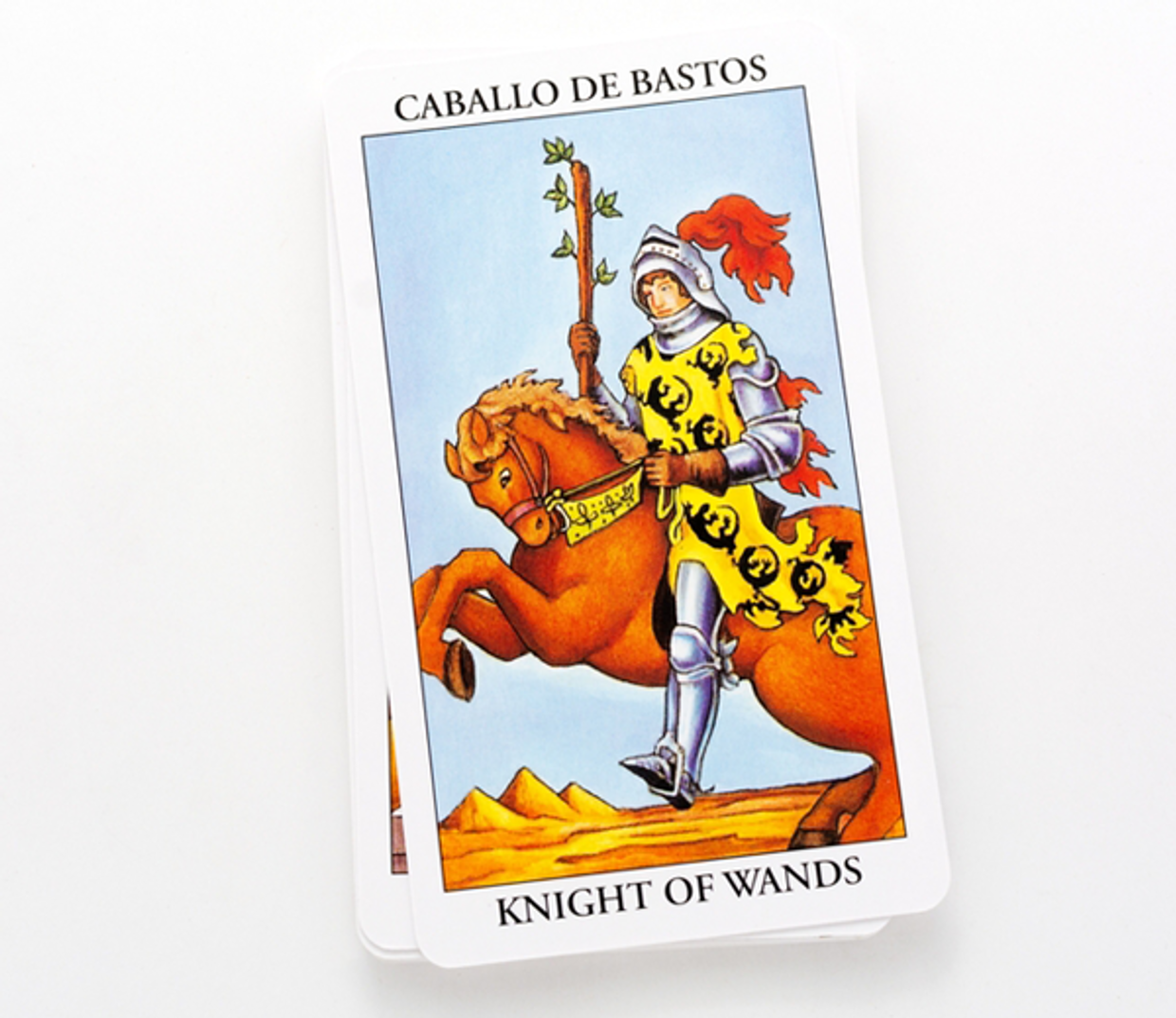
Knight of Wands
Traditional theme: Adventure and decisive action.
How I read it: Energy is high, but consistency may be the real issue.
Reversed: Impulse can overtake planning, creating bursts of activity that are difficult to sustain.
Joanne's question:
“What happens after the excitement of beginning wears off?”
Queen of Wands
Traditional theme: Confidence, warmth, and independence.
How I read it: Confidence doesn't require somebody else to become smaller.
Reversed: Confidence may be shaken, or insecurity may be expressed as comparison, jealousy, or defensiveness.
Joanne's question:
“Where could you take up more space without apologising for it?”
King of Wands
Traditional theme: Vision, leadership, and purposeful action.
How I read it: Vision becomes useful when it translates into direction.
Reversed: Leadership can become impatience or domination when confidence stops listening to other people.
Joanne's question:
“Are you leading towards something clear, or expecting others to follow enthusiasm alone?”
Cups: Emotion, Relationships & Connection
Cups often appear strongly in love readings, but relationship questions can involve every suit and the Major Arcana too.
Our Love Tarot Readings guide explores how emotional and relationship themes develop across an entire spread.
Ace of Cups
Traditional theme: Emotional opening and new feelings.
How I read it: Something emotionally new is becoming available, but openness still requires participation.
Reversed: Feelings may be blocked, withheld or difficult to receive even when emotional potential exists.
Joanne's question:
“What are you becoming emotionally ready to receive?”
Two of Cups
Traditional theme: Partnership, attraction, and mutual connection.
How I read it: Connection matters most when there is genuine exchange rather than one-sided hope.
Reversed: Attraction or connection may remain, but imbalance, misunderstanding or poor communication can disrupt mutuality.
Joanne's question:
“What evidence is there that this connection is mutual?”
Three of Cups
Traditional theme: Friendship, support, and celebration.
How I read it: Relationships outside romance matter too.
Reversed: Social support may feel strained through exclusion, tension, excess or outside interference.
Joanne's question:
“Who reminds you that you don't have to handle everything alone?”
Four of Cups
Traditional theme: Disengagement and reconsideration.
How I read it: An opportunity may exist while someone's attention is fixed somewhere else.
Reversed: Interest may be returning, or someone may finally notice an option they previously ignored.
Joanne's question:
“What are you overlooking because it isn't arriving in the form you expected?”
Five of Cups
Traditional theme: Disappointment, grief, and regret.
How I read it: Loss deserves acknowledgement, but it may not be the entire picture.
Reversed: Recovery may be beginning, although moving forward doesn't require pretending the disappointment didn't matter.
Joanne's question:
“What are you still focusing on that makes it difficult to see what remains?”
Six of Cups
Traditional theme: Memories, nostalgia and the past.
How I read it: Familiarity can be comforting without necessarily meaning the past should be recreated.
Reversed: Nostalgia may be keeping somebody emotionally tied to an idealised version of the past.
Joanne's question:
“Are you missing the person, or missing how life felt at that time?”
Seven of Cups
Traditional theme: Options, imagination, and competing possibilities.
How I read it: More choice doesn't automatically produce greater clarity.
Reversed: Some possibilities may be falling away, allowing the person to see more clearly what is realistic.
Joanne's question:
“Which possibility still makes sense once you separate imagination from evidence?”
Eight of Cups
Traditional theme: Emotional reassessment and walking away.
How I read it: Leaving something doesn't prove it never mattered.
Reversed: Someone may be afraid to leave, uncertain about moving on, or repeatedly return to something they already know isn't enough.
Joanne's question:
“What can matter deeply and still no longer be enough for you?”
Nine of Cups
Traditional theme: Satisfaction, wishes, and enjoyment.
How I read it: Getting what you wanted and discovering what you actually needed aren't always the same thing.
Reversed: Expectations may have promised more satisfaction than reality delivered.
Joanne's question:
“If you received exactly what you're asking for, would it actually satisfy you?”
Ten of Cups
Traditional theme: Emotional harmony, family, and shared happiness.
How I read it: The card can represent shared emotional fulfilment, but real relationships still require communication rather than permanent perfection.
Reversed: The ideal picture may not match what is happening within the family or relationship itself.
Joanne's question:
“What does emotional security actually look like to you in everyday life?”
Page of Cups
Traditional theme: Emotional curiosity and sensitivity.
How I read it: A feeling may be real without yet being mature or fully understood.
Reversed: Emotional insecurity or immaturity may make feelings difficult to communicate consistently.
Joanne's question:
“What feeling are you only beginning to understand?”
Knight of Cups
Traditional theme: Romance, emotional pursuit and following the heart.
How I read it: Romantic intention and reliable behaviour are not automatically the same thing.
Reversed: Romantic expectations can become unrealistic, inconsistent, or more attractive in imagination than in everyday reality.
Joanne's question:
“What happens when the romantic gesture has to become everyday consistency?”
Queen of Cups
Traditional theme: Compassion, intuition, and emotional awareness.
How I read it: Empathy needs boundaries, or it can become emotional overload.
Reversed: Sensitivity may become overwhelming, poor boundaries or taking responsibility for emotions that belong to somebody else.
Joanne's question:
“Can you understand how somebody feels without taking responsibility for fixing it?”
King of Cups
Traditional theme: Emotional maturity, balance, and compassion.
How I read it: Emotional control is healthiest when it isn't emotional suppression.
Reversed: Calmness may mask emotional avoidance, instability, or manipulation.
Joanne's question:
“Can you remain calm without pretending you don't feel anything?”
Swords: Thought, Communication & Truth
Ace of Swords
Traditional theme: Clarity, truth, and breakthrough.
How I read it: New understanding can solve confusion but may also require an uncomfortable decision.
Reversed: Clarity may be obscured by misinformation, assumptions, or conclusions reached too quickly.
Joanne's question:
“What becomes unavoidable once you admit what you know?”
Two of Swords
Traditional theme: Stalemate, uncertainty, and difficult choices.
How I read it: Sometimes indecision feels safer because choosing closes another option.
Reversed: Information may be emerging, but delaying a decision can become a decision in itself.
Joanne's question:
“What information are you waiting for, and is it actually available?”
Three of Swords
Traditional theme: Heartache, disappointment, and difficult truth.
How I read it: Pain doesn't tell us how long recovery will take or what happens next.
Reversed: Healing may be underway, although processing hurt is rarely identical to pretending it no longer matters.
Joanne's question:
“What hurts because it happened, and what hurts because of what you expected to happen?”
Four of Swords
Traditional theme: Rest, recovery, and mental space.
How I read it: Rest is productive when it restores, not when it simply delays.
Reversed: Restlessness or burnout may suggest somebody is trying to return to full activity before recovery is complete.
Joanne's question:
“What could become clearer if you stopped trying to solve this while exhausted?”
Five of Swords
Traditional theme: Conflict and hollow victory.
How I read it: Winning an argument can still damage the relationship around it.
Reversed: Conflict may be easing, but resentment can remain even after open disagreement stops.
Joanne's question:
“What would winning actually cost you?”
Six of Swords
Traditional theme: Transition and moving away from difficulty.
How I read it: Improvement can be gradual rather than dramatic.
Reversed: Moving forward may be difficult because unresolved issues are still travelling with the person.
Joanne's question:
“What are you moving away from even if you haven't reached the destination yet?”
Seven of Swords
Traditional theme: Strategy, secrecy, and independent action.
How I read it: Strategy and deception aren't automatically the same thing.
Reversed: Something concealed may be exposed, admitted, or recognised as unsustainable.
Joanne's question:
“What are you keeping private, and why?”
Eight of Swords
Traditional theme: Restriction and feeling trapped.
How I read it: Some limitations are real; others become stronger because somebody no longer recognises the choices still available.
Reversed: A new perspective can reveal choices that previously felt invisible.
Joanne's question:
“Which part of this situation is genuinely fixed, and which part only feels fixed?”
Nine of Swords
Traditional theme: Anxiety, worry, and overthinking.
How I read it: A frightening thought is not automatically a prediction.
Reversed: Perspective may be returning, although persistent worry can sometimes continue even after circumstances improve.
Joanne's question:
“What is happening, and what are you afraid might happen?”
Ten of Swords
Traditional theme: Exhaustion, endings and reaching a limit.
How I read it: Sometimes the useful information is that something cannot be pushed any further.
Reversed: Recovery may begin once somebody stops trying to revive something that has already reached its limit.
Joanne's question:
“What would accepting that this has reached its limit allow you to stop doing?”
Page of Swords
Traditional theme: Curiosity, alertness, and new information.
How I read it: Curiosity becomes unhelpful when it turns into assumption or surveillance.
Reversed: Questions can turn into gossip, impulsive conclusions or searching for information simply to relieve uncertainty.
Joanne's question:
“What do you genuinely need to know, and what are you simply tempted to find out?”
Knight of Swords
Traditional theme: Fast action and determination.
How I read it: The Knight has plenty of momentum. The question is whether speed is helping the situation or preventing somebody from thinking it through.
Reversed: Determination may become rushing, aggression or action taken without sufficient planning.
Joanne's question:
“What might you miss if you rush this?”
Queen of Swords
Traditional theme: Independence, honesty, and clear thinking.
How I read it: Clarity doesn't require cruelty.
Reversed: Honesty can become excessive criticism or bitterness when hurt begins shaping every judgement.
Joanne's question:
“Can you tell the truth without using it as a weapon?”
King of Swords
Traditional theme: Logic, strategy, and intellectual authority.
How I read it: Logic is valuable, but human situations aren't always solved by removing emotion from the equation.
Reversed: Authority or intellect may be used rigidly, manipulatively or without enough consideration for the people affected.
Joanne's question:
“What does the evidence say, and what important human factor might logic alone overlook?”
Pentacles: Work, Money & Practical Life
Ace of Pentacles
Traditional theme: Practical opportunity and new potential.
How I read it: An opportunity is the beginning of something, not proof that it will succeed automatically.
Reversed: The opportunity may be delayed, poorly planned or built on foundations that need strengthening first.
Joanne's question:
“What could become real if you actually developed this opportunity?”
Two of Pentacles
Traditional theme: Balance, adaptability, and competing priorities.
How I read it: Managing everything isn't the same as everything being manageable.
Reversed: Too many competing demands may have moved beyond flexible juggling into genuine imbalance.
Joanne's question:
“What are you constantly juggling that may need a more permanent solution?”
Three of Pentacles
Traditional theme: Teamwork, skill, and cooperation.
How I read it: Good work often depends on different skills being respected rather than everybody working identically.
Reversed: Poor collaboration or inconsistent standards may undermine good individual work.
Joanne's question:
“Whose contribution would make this stronger if you stopped trying to do it all yourself?”
Four of Pentacles
Traditional theme: Security, control, and protecting resources.
How I read it: Protection can gradually become fear of change.
Reversed: Letting go may be necessary, although releasing control can initially make somebody feel less secure rather than more.
Joanne's question:
“What are you protecting because it's valuable, and what are you holding because you're afraid to let go?”
Five of Pentacles
Traditional theme: Hardship, exclusion, and lack of support.
How I read it: Difficulty can make somebody focus so completely on what is missing that available help becomes harder to recognise.
Reversed: Improvement may be beginning, especially when support or resources become easier to accept.
Joanne's question:
“What support exists that you haven't yet allowed yourself to use?”
Six of Pentacles
Traditional theme: Giving, receiving and fair exchange.
How I read it: Generosity and dependency can sit closer together than people realise.
Reversed: Assistance may come with conditions, or an exchange may be much less balanced than it first appears.
Joanne's question:
“Is this exchange genuinely balanced, or does one person hold all the power?”
Seven of Pentacles
Traditional theme: Patience, assessment, and long-term progress.
How I read it: Patience is useful when something is growing, not when time is the only thing being invested.
Reversed: Frustration may be showing that somebody needs to reassess whether further effort is actually worthwhile.
Joanne's question:
“Are you waiting because this needs time, or because you've already invested too much to walk away?”
Eight of Pentacles
Traditional theme: Skill, practice, and consistent work.
How I read it: Improvement often looks repetitive before it looks impressive.
Reversed: Repetition without learning can become poor-quality work or effort without genuine development.
Joanne's question:
“What would become easier if you stopped expecting yourself to master it immediately?”
Nine of Pentacles
Traditional theme: Independence, self-sufficiency, and enjoying progress.
How I read it: Independence is valuable, but it doesn't require rejecting connection.
Reversed: Security may depend too heavily on appearance, another person's resources, or external validation.
Joanne's question:
“What have you created for yourself that you should allow yourself to enjoy?”
Ten of Pentacles
Traditional theme: Long-term stability, family resources, and legacy.
How I read it: Security often comes from what you build over time rather than what feels exciting in the moment.
Reversed: Long-term plans may be affected by family tension, unstable foundations or decisions focused too heavily on the short term.
Joanne's question:
“What are you building that needs to last beyond the immediate result?”
Page of Pentacles
Traditional theme: Learning and practical opportunity.
How I read it: This Page often makes me think about willingness to become a beginner.
Reversed: Potential may exist, but procrastination or unrealistic planning can prevent practical progress.
Joanne's question:
“What practical skill would change things if you were willing to learn it properly?”
Knight of Pentacles
Traditional theme: Reliability, patience, and steady progress.
How I read it: Consistency is useful until routine becomes stagnation.
Reversed: Reliability can become stubbornness or monotony when staying consistent matters more than recognising that something needs to change.
Joanne's question:
“Are you moving slowly because you're building carefully, or because you've stopped challenging yourself?”
Queen of Pentacles
Traditional theme: Practical care, security, and resourcefulness.
How I read it: Caring for others becomes unsustainable when your own practical needs disappear from the equation.
Reversed: Overgiving or insecurity may create an imbalance between looking after everybody else and looking after yourself.
Joanne's question:
“What would caring for yourself look like in practical terms?”
King of Pentacles
Traditional theme: Stability, responsibility, and practical success.
How I read it: Material security is most useful when it supports life rather than becoming the only measure of it.
Reversed: Success may become controlling, overly materialistic, or poorly managed when security becomes an end in itself.
Joanne's question:
“What has success actually given you besides the thing you worked to obtain?”
How Tarot Numbers Help You Read the Minor Arcana
One of the fastest ways to stop thinking of the Minor Arcana as 56 separate definitions is to compare the same number across different suits.
Take the Fives:
Five of Wands brings challenge into action and competing priorities.
Five of Cups expresses it through emotional disappointment.
Five of Swords moves the challenge into conflict and communication.
Five of Pentacles brings it into practical difficulty or lack.
The suit changes.
The Five still introduces disruption, adjustment, or challenge.
Very Broadly:
Ace — potential.
Two — duality or interaction.
Three — development.
Four — stability.
Five — disruption.
Six — response or rebalancing.
Seven — assessment.
Eight — movement or development.
Nine — approaching culmination.
Ten — completion or full expression.
These aren't rigid rules. They are patterns that give individual cards somewhere to belong.
I don't treat these number patterns as rules that override the individual card. I use them as a framework. If you understand what a Five tends to introduce, for example, you already have a useful starting point before considering how Wands, Cups, Swords, or Pentacles change their expression.
How Court Cards Work
Pages, Knights, Queens, and Kings don't have to describe literal people.
They can represent a person, but they may also describe a quality, behaviour, approach, stage of development, or how the suit is expressed. For example, the Queen of Cups might describe an emotionally perceptive person, but she could also represent an empathetic way of approaching the situation.
Likewise, the King of Pentacles doesn't automatically mean a wealthy man. He might represent a practical, stable approach to money, work, security, or responsibility.
That's why I don't rush to attach every Court Card to a particular person.
- A Page often explores or learns.
- A Knight puts the suit into motion.
- A Queen can represent mature internal expression.
- A King often represents established or outward authority.
They are not fixed gender roles.
A Queen does not have to mean a woman.
A King does not have to mean a man.
The question I prefer is:
“What quality is this Court Card bringing into the reading?”
That question prevents me from assuming, for example, that a Queen must represent a woman in the customer's life or that a King must describe a particular man. Sometimes the Court Card is much more useful when read as a behaviour, quality, or way of approaching the situation.
How Do Tarot Suits Work Together?
When I'm reading Tarot, I don't only look at the meaning of each individual card.
I also look for patterns across the spread.
If I see a large number of cards from one suit, I may ask myself if this is something I need to pay more attention to in the reading.
Here are some examples:
- Multiple Cups may want to shine light on emotion. Relationships. Reactions or intuition.
- Multiple Swords may cause me to dig deeper into communication. Decisions. Anxieties. Conflicts or someone's thought process.
- Multiple Wands may cause me to focus on actions. Desire. Attraction. What someone wants to achieve.
- Multiple Pentacles may cause me to focus more on the practical aspect of the question. Job. Money. Home. Stability.
I want to see how the suits play off each other. I want to see how the suits play off each other.
Cups & Swords
Say I pull multiple cups and swords in a relationship spread.
I may have a lot of emotion going on but I want to see what is being said. Or not being said.
Are there conflicts? Is someone anxious about something that could happen?
Maybe someone is assuming things because nothing was brought up.
So, I know emotion is playing a factor. But I can dig deeper with the swords.
Cups & Pentacles
Maybe I have multiple Cups and Pentacles.
Once again, I know there is emotion, but I may start to focus on the practical aspect of the relationship.
Are they both trying? Do they have stability? Are their feelings carried over into everyday life?
I would not say they will stay together based on these cards. Just that there are more aspects I can explore.
Cups & Wands
Maybe I see multiple Cups and Wands.
I may focus on the relationship between emotions and action.
They could be feeling something or attracted to one another. But what are they doing?
Are they acting on those feelings? Letting them know they care?
There could be lots of emotion and passion, but not much follow-through.
What If a Tarot Suit Isn't Present?
What if there are no cards from a certain suit?
I also pay attention to whether a suit is not present or barely present.
This doesn't mean something is not there.
Just because I have no Cups in a relationship spread doesn't mean there are no feelings.
Maybe the cards are just focusing on other aspects.
But it can be something to dig into as well.
If I have multiple Cups and barely any Pentacles in a relationship spread.
I could have lots of information about how they feel for each other. But not much on whether they have stability in their everyday life.
Or if I have many Pentacles and no Cups in a career spread.
There could be lots of information on job/money/stability. But not much on whether they enjoy what they are doing.
Once you start spending more time with Tarot, you'll begin to see these things without even trying.
Don't force it just because you see a suit appear multiple times.
Use it as a question to dig deeper into your reading.
Do Reversed Tarot Cards Mean the Opposite?
A reversal can mean many things.
The card's energy may be blocked, delayed, internalised, excessive, avoided, underdeveloped or expressing itself in a more difficult way.
Take Strength.
Upright, it can represent courage, patience, and resilience.
Reversed, it doesn't have to mean:
“You are weak.”
It could describe depleted confidence or difficulty accessing the strength already present.
For me, that creates a more useful interpretation than simply turning the upright keyword into its opposite.
How Tarot Cards Change Meaning Together
This is where definitions become interpretation.
Imagine:
The Tower → Judgement → The World
The Tower introduces disruption.
Judgement introduces recognition.
The World introduces completion.
Together, we could begin exploring a story in which disruption exposes something, recognition follows and that understanding contributes towards closure.
Now change the sequence:
The Tower → Eight of Swords → The Moon
The Tower hasn't changed between those two examples. The cards around it have.
That's why I never interpret an individual card as though the rest of the spread isn't there.
Two of Cups → Eight of Pentacles → Temperance
The Two of Cups may introduce connection.
The Eight of Pentacles brings effort and something being worked on.
Temperance introduces patience, adjustment, and balance.
Together, I might explore whether a connection is being worked on and gradually brought into greater balance.
Now change the surrounding cards:
Two of Cups → Seven of Swords → The Moon
The Two of Cups hasn't suddenly stopped representing connection.
But the Seven of Swords and The Moon introduce very different questions around privacy, uncertainty, incomplete information, or assumptions.
I wouldn't immediately interpret those cards as:
“Somebody is definitely lying.”
Instead, I'd ask what is actually known, what isn't known and whether uncertainty is affecting how the connection is being understood.
That's why I never interpret an individual Tarot card as though the rest of the spread isn't there.
The meaning of the card gives me a starting point. The cards around it help me understand how that meaning may be expressing itself in this particular reading.
What Tarot Cards Can and Cannot Tell You
Tarot can provide a framework for exploring a situation, but responsible interpretation also means recognising what a card cannot establish as fact.
Death does not guarantee physical death.
The Lovers does not guarantee a relationship.
The Three of Swords does not prove somebody is cheating.
The Ten of Pentacles does not guarantee wealth.
The Star does not guarantee your ex is returning.
Judgement does not automatically mean reconciliation.
The Eight of Cups does not prove somebody doesn't care.
And a card appearing in a feelings position cannot independently establish another person's private thoughts as fact.
If reconciliation is the question you're exploring, our Tarot Cards for Reconciliation guide looks at different card themes without treating them as promises.
A responsible reading can offer another perspective that you may want to consider before you make your own decisions.
After more than three decades of readings, this is something I feel strongly about. A reader shouldn't turn uncertainty into certainty simply because certainty sounds more impressive or the reader feels it’s what the client wants to hear. Sometimes a card raises a possibility or a question without establishing something as fact. For me, being honest about that is part of giving a responsible reading.
How to Learn All 78 Cards Without Memorising Them
If someone told me they were struggling to remember all 78 Tarot cards, I wouldn't tell them to spend more time memorising definitions.
I'd tell them to learn the structure of the deck first.
Start with Major and Minor Arcana. Then learn what each suit tends to represent. After that, look for the patterns in the numbers and Court Cards before paying closer attention to imagery and context.
Eventually, you stop asking:
“How am I going to remember 78 definitions?”
and begin asking:
“What does this card already tell me because of where it belongs?”
That is a much easier way to learn.
Once you understand where a card belongs, you're no longer starting from nothing every time you pull a card from the deck.
What Do People Ask About in Tarot Readings?
People rarely approach a reading with an abstract question about Tarot symbolism. They bring something happening in their lives: uncertainty within a relationship, a breakup, a decision about work, family changes, or confusion about somebody's behaviour.
That's one reason I think it's important to move beyond keywords when interpreting the cards.
In Trusted Psychics' 2026 Customer Survey, we analysed 102 verified positive customer reviews across 21 reader profiles. Reassurance, support, calm, hope, or emotional help appeared in 61.8% of those reviews, while 45.1% referred to detail, specificity or a reader picking up information about the customer's circumstances.
For me, that reinforces an important distinction. Customers aren't usually looking for somebody to recite a Tarot definition. They're trying to understand something that matters to them.
The traditional meaning gives the reader a foundation. The skill lies in exploring how that symbolism relates to the customer's actual question without turning the card into a guarantee or making their decision for them.
Some of Our Experienced Tarot Readers
I've always believed that experience with Tarot goes beyond knowing the traditional meanings of the cards. Each of these readers brings their own reading style and approach to interpreting Tarot, supported by excellent feedback from Trusted Psychics customers.
With experience, readers develop their own relationship with the deck and their own way of understanding how individual cards work together within a reading.
These are just a small selection of our Trusted Psychics Tarot readers available by telephone 24 hours a day or through Psychic Messenger.
Betty — Reader 1497
Joe — Reader 3722
Peter — Reader 5594
Tara — Reader 6727
Winnie — Reader 8623
You can explore their individual profiles to learn more about their experience, reading style and the tools they use, before choosing who feels appropriate for you.
View Our Tarot Readers →
Frequently Asked Questions About Tarot Card Meanings
Why Are There 78 Tarot Cards?
A standard modern Tarot deck contains 22 Major Arcana and 56 Minor Arcana cards, giving a total of 78.
Is the Fool 0 or 22?
The Fool is conventionally numbered 0 in most modern decks, although its unusual role means it is sometimes discussed outside the normal numbered progression.
Are All Tarot Decks the Same?
No.
Many follow a 78-card structure but may use different artwork, names, symbolism, and traditions.
Why Are Pentacles Sometimes Called Coins?
Different traditions use different suit names.
Pentacles, Coins and Disks may all refer to the practical/material suit.
Can You Read Tarot Using Only Major Arcana?
Yes.
Some readings and learning exercises use only the 22 Major Arcana cards, although the complete deck provides considerably more everyday detail.
Are Tarot and Oracle Cards the Same?
No.
Tarot has a recognised structural system.
Oracle decks are created according to the individual deck designer's chosen number of cards and themes.
Which Tarot Card Should a Beginner Learn First?
There is no required first card.
Many begin with The Fool, but I think understanding the structure of the deck first makes every individual card easier to learn.
What Is the Difference Between Upright and Reversed Tarot Cards?
A reversed card is turned upside down in your spread. I will not always assume that the meaning of the card is the opposite of the upright meaning.
Sometimes when a card is reversed it can be blocked from flowing freely, may take longer to manifest, may be turned inward, too much of something, or something you're running from or just not allowing yourself to experience that theme.
Strength when upright can be associated with bravery and patience. Reversed this does not necessarily mean that you are weak. Maybe your confidence has been depleted or you are unable to reach your inner strength.
Just remember that whatever theme the card represents can still play a factor in your reading just in different ways.
Final Thoughts From Joanne Jones
After more than three decades around readings, I don't think the hardest part of learning Tarot is remembering what 78 cards mean.
It's learning when one part of a card's meaning matters more than another.
Traditional meanings give you the foundation. From there, you begin noticing the card family, suit, number or Court role, imagery, question, position, and surrounding cards.
Eventually, the deck stops looking like 78 separate definitions.
It starts behaving more like a language.
Learn the vocabulary. Then start listening to the conversation.
For me, that's where reading Tarot becomes much more interesting.
— Joanne Jones, Founder of Trusted Psychics.
About Joanne Jones
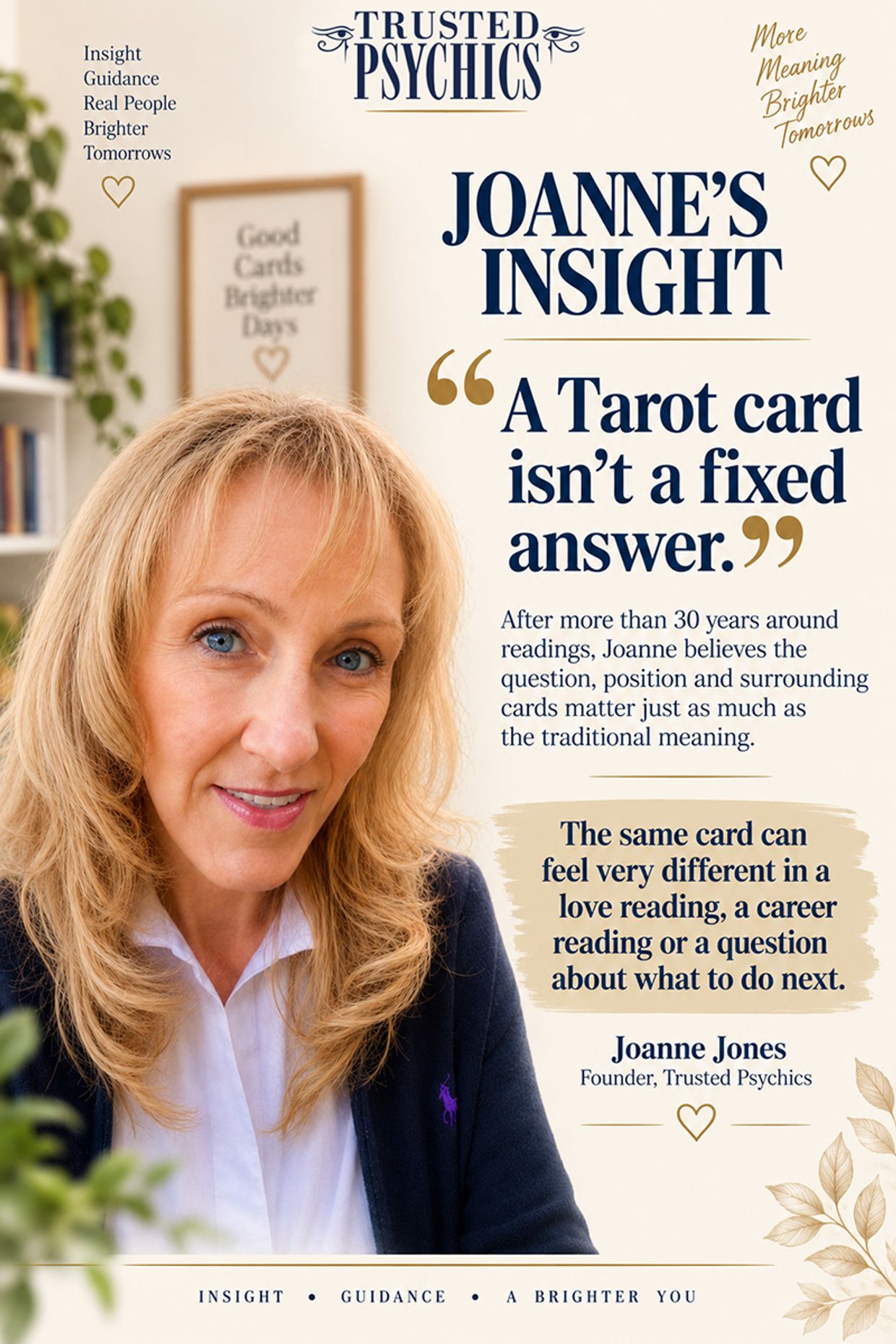
Joanne Jones is the Founder of Trusted Psychics. She is a psychic medium, astrologer and Tarot reader/author who has an avid love for Tarot.
What she finds enjoyable about Tarot is that each card can mean something different based on the question being asked. It can also depend on its position in the spread and the cards around it.
She likes to go beyond keywords and try to understand how the cards work together. What message the imagery is giving and why she thinks that meaning applies to the person and question at hand.
Joanne takes part in sourcing new readers to join the Trusted Psychics team. She wants to find people who she thinks will suit our team. Of course, being able to read is important, but it also depends on who you are as a person. Experience, kindness, understanding, ability to listen and caring about your client are all qualities she looks for.
Anyone can learn the traditional meanings of each tarot card. Becoming a good tarot reader takes much more than that. Learning about the Tarot’s history and layout, how the cards relate to each other and interpreting those meanings during a reading.
Being able to read what you see and be honest with the client you're helping is another aspect.
Knowing all the card meanings will not make you a good tarot reader. Knowing when and why they apply will.
We Think You’ll Love These Articles …..
Why Do People Have Psychic Medium Readings? 10 Reasons
How To Contact A Trusted Psychic
Phone a live Psychic 24 hours a day
View all our live phone psychic and tarot readers online.
View All Live readersMessage a live Psychic 24 hours a day:
View all our live messenger psychic and tarot readers online.
launch messenger
Recent Articles From the Trusted Psychics Blog

Top 10 Tarot Readers UK
Meet our Top 10 Tarot Readers in the UK. Compare experience, reading styles, specialisms and verified profiles to find a trusted Tarot reader in the UK.

Tarot Cards for Reconciliation
Which tarot cards mean your ex may return? Learn the top reconciliation cards, combinations & timing clues from Trusted Psychics, the professional tarot readers.

9 of Cups Tarot Meaning
Discover the 9 of Cups tarot meaning in love, career, & money, plus yes/no guidance, and reversed messages. Written by Joanne Jones for Trusted Psychics.

1221 Angel Number Meaning
Seeing 1221 everywhere? Learn the spiritual meaning of 1221, why you keep noticing it, how it relates to love, balance & new beginnings with Trusted Psychics.

The Wheel of Fortune Tarot Card
Discover the Wheel of Fortune tarot meaning in love, career, money and spirituality. Learn upright vs reversed interpretations, symbolism, and destiny messages.
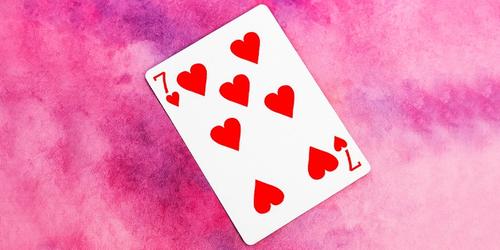
7 of Hearts Meaning in Cartomancy
What does the 7 of Hearts mean in cartomancy? Explore love, career & spiritual guidance. Joanne Jones of Trusted Psychics explains this emotional card in-depth.